
AI and the Consumer Experience - Board Room Essay #6
Welcome to the Planet of the Apps
By Tom Lawry - August 21, 2026
Hundreds of millions of consumers have strapped medical-grade sensors to their wrists — and a landmark six-country AMA study shows more than 85% of physicians already review that wearable data. Yet fewer than 6% of clinical workflows are built to use it. In this Board Room Essay, Tom Lawry shows healthcare leaders why the 79-point readiness gap is an infrastructure decision, not a physician problem — and what to do about it.
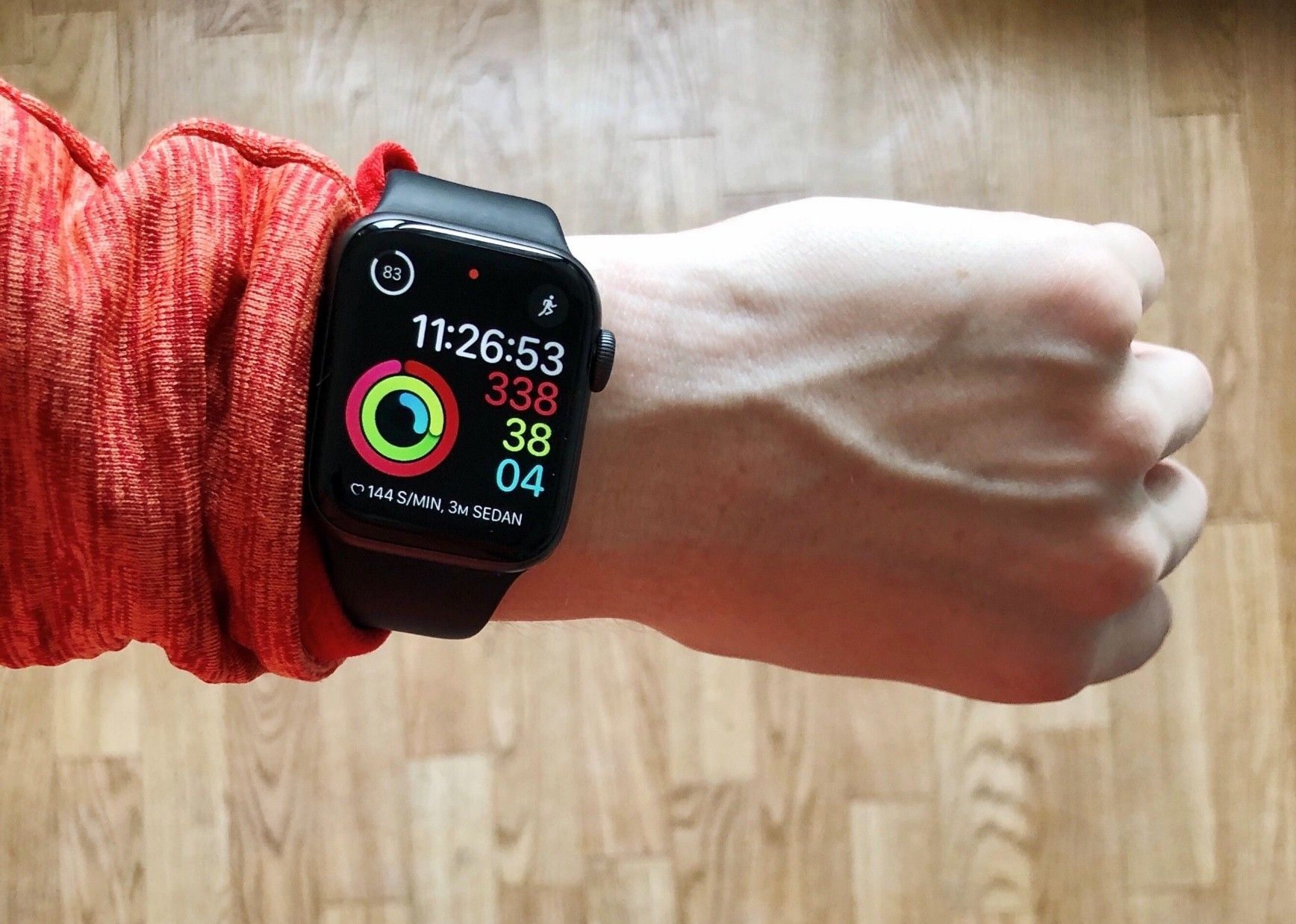
Intelligence has become the background hum of modern life — so embedded it's almost invisible.
We don't log on anymore. We live logged on. We wake to a device, navigate by one, pay with one, and fall asleep next to one. Welcome to the Planet of the Apps.
Consider the pace of change: one study estimates the average person globally now logs nearly 4,900 digital interactions every day. In 2010, that number was 298.¹
Nowhere is this shift more visible than on our wrists. In 2019, something happened that would have seemed unthinkable a decade earlier: Apple — a company that had been making watches for all of four years — outsold the entire Swiss watch industry. Thirty-one million Apple Watches against twenty-one million timepieces from every Swiss brand combined.² An industry with a three-century head start, lapped by a smartphone company.
That was the crossover moment. Global smartwatch shipments now run roughly ten times the unit volume of all Swiss watch exports.³
And here's the part health leaders must consider: consumers aren't buying these devices to tell time.
They're buying them to monitor heart rhythms, track sleep, detect falls, and measure the daily workings of their own bodies. Hundreds of millions of people have voluntarily strapped medical-grade sensors to their wrists and paid for the privilege.
The consumers have moved. The data is flowing.
So where is healthcare?
Doctors are ready. The system is not.
For years, the convenient explanation for healthcare's digital lag was physician resistance. Doctors, the story went, didn't trust consumer devices and didn't want the data.
That story just collapsed.
A great study by the American Medical Association's Center for Digital Health and AI, in partnership with Medscape, surveyed more than 2,200 physicians across six countries — the United States, Canada, the United Kingdom, France, Germany, and Spain.⁴ What they found should reframe every boardroom conversation about digital health strategy.
More than 85 percent of physicians already review patient wearable data. Just 3 percent say they never do. Roughly three in four physicians see a clinical advantage in using this data to care for patients. And 82 percent of physicians wear these devices themselves.
Patients are pushing too. Every week, physicians report patients asking them to review wearable data, asking for guidance on what it means, and scheduling visits because of something their device told them.
This is not a future trend to monitor. It's foot traffic already walking through your front door.
Read those two numbers together. Eighty-five percent willing. Six percent enabled. That 79-point gap is not a physician problem. The AMA's analysis is unambiguous on this point: differences in adoption were tracked to reimbursement, workflow feasibility, and regulatory conditions — not to physician interest.
As AMA CEO Dr. John Whyte put it: “There is genuine acceptance and interest from physicians and patients alike in using this data. The problem is that the system is not set up to do it.”
What the gap is made of
The study identifies the barriers with precision, and they map directly to decisions boards and executive teams can control or influence:
- Data that goes nowhere. Wearable data rarely flows into the electronic health record. If it doesn't appear where clinicians work, it doesn't exist. Physicians told the AMA exactly that.
- Work that no one pays for. In most of the six countries, there is no clear reimbursement pathway for reviewing or acting on patient-generated data. Healthcare has built a payment system that compensates treating illness and ignores the data stream that could prevent it.
- Liability without guardrails. Physicians who see the value still hesitate when no one has defined their responsibility for a torrent of data they didn't order.
- Workflows built for a paper era. Even willing clinicians have no protocol, no triage layer, and no time. Raw data without an intelligence layer is just more burden.
Notice what's absent from that list: any lack of physician enthusiasm, any shortage of patient demand, any missing technology.
The international comparison drives this home. Germany — with reimbursement support and the clearest workflow feasibility — shows the strongest integration pipeline. Countries without those conditions lag, regardless of how enthusiastic their physicians are. The variable isn't the doctors. It's the decisions made above them.

Complexity is not an excuse
At this point, some leaders retreat to a familiar refrain: healthcare is different. More regulated. More complex. More consequential.
All of that is true — and also beside the point.
Consumers don't experience regulation. They experience interaction. They don't see complexity. They feel confusion. They don't care why something is hard. They only know that it is.
The world has already reset expectations for how organizations communicate, respond, and adapt. Healthcare didn't opt out of that reset. It simply hasn't acknowledged it.
The message for executive teams and the board room
Healthcare has spent a decade asking whether consumers and clinicians are ready for digital health. That was always the wrong question. They're ready. They've been ready. The consumers went first, the clinicians followed, and both are now waiting on the institutions.
On the Planet of the Apps, your patients generate more health data in a week than their medical record accumulated in a decade. Their devices know their heart rhythms, their sleep, their movement, their baselines — and can flag when something changes.
Every other consumer-facing industry has been rebuilt around this reality. Banking. Retail. Travel. Entertainment. The organizations that thrived didn't wait for the movement to be convenient. They built the infrastructure to meet their customers where the customers already were.
Healthcare's customers are already there. They're wearing the sensors. Their physicians want the data. AI now exists to turn that torrent into signal — to summarize, triage, and surface what matters so the data reduces clinical burden instead of adding to it.
What's missing is the decision to act. Reimbursement models that value data-informed prevention. Integration that puts wearable signal inside the clinical workflow, not beside it. Liability frameworks that protect clinicians who engage. An intelligence layer that makes the data usable at the speed of practice.
None of that will come from consumers. They've done their part. None of it will come from physicians. They've declared themselves willing. It will come — or fail to come — from the leaders who control the infrastructure, the incentives, and the priorities.
The digital and AI revolution in health isn't coming. It arrived years ago, one wrist at a time. The only open question is whether healthcare's leaders will build the bridge to meet it — or keep watching the most valuable health data in history flow past their front door.
The consumers have moved. Now, it's your move.
SOURCES:
1. RBC Capital Markets (2021). The Healthcare Data Explosion. Available at: https://www.rbccm.com/en/gib/healthcare/episode/the_healthcare_data_explosion [Accessed 8 April 2026].
2. Strategy Analytics (2020). Apple Watch Outsells the Entire Swiss Watch Industry in 2019. Press release, February 5, 2020.
3. Federation of the Swiss Watch Industry (2026), 2025 export statistics (14.6 million units); IDC/Counterpoint Research global smartwatch shipment estimates for 2025 (~160 million units).
4. American Medical Association Center for Digital Health and AI & Medscape (2026). AMA Multi-Country Study on Consumer Wearable Data in Clinical Practice (2026 International Physician Survey on Consumer Wearables; n=2,222 physicians: US, Canada, UK, France, Germany, Spain).