Tom Lawry • January 13, 2026

The Real Disruption in Healthcare Isn’t AI. It’s the Rise of the Intelligent Health Consumer.

There’s a quiet but consequential misunderstanding happening in healthcare right now.


Across boardrooms and conference stages, leaders talk about artificial intelligence as if it’s the disruption to manage—the next great differentiator between healthcare organizations. Strategies are framed around AI adoption, governance, and maturity, as though intelligence itself is the “holy grail.”


It isn’t.


The real disruption didn’t arrive as a technology roadmap or a vendor demo. It walked through the front door, pulled out a phone, and sighed in frustration.


Your competition isn’t the health system across town. It’s the experience someone had with Amazon the night before.

Healthcare is no longer evaluated against healthcare. It’s evaluated against the rest of a person’s life—and in 2026 that life is increasingly intelligent, mobile, personalized, and relentlessly convenient. That is the shift many healthcare organizations still haven’t fully internalized.

Welcome to the era of the Intelligent Health Consumer.


I first wrote about the rise of the Intelligent Health Consumer in my 2020 book, AI in Healthcare – The Rise of Intelligent Health Systems. At the time, the idea felt forward-looking. Today, it’s no longer a prediction. It’s simply reality.


Consumers don’t wake up thinking about AI. They wake up inside it.


Intelligence has become the background hum of daily life—so embedded that it’s almost invisible. A wearable quietly interprets sleep patterns and physiological signals overnight. A bank resolves fraud before anxiety ever has a chance to surface. A travel app predicts price changes with uncanny timing. A streaming service understands mood and preference like a close friend.


None of this feels magical anymore. It feels normal.


And that distinction matters.


Because consumers don’t care how these systems work. They care about how they feel. These experiences remove effort. They anticipate needs. They deliver clarity without demanding attention. They respect time.


This is the world people now inhabit—one where intelligence fades into the background and life simply works.


And then a consumer enters healthcare.


Suddenly, everything slows down.


Tasks that should take minutes stretch into days. Answers that should be clear are buried inside portals filled with PDFs, unexplained terminology, and fragmented information. Scheduling feels transactional. Billing feels adversarial. Navigation feels like guesswork rather than guidance.


Not because clinicians lack compassion or capability—but because the experience surrounding the extraordinary skills, talents, and hopes of doctors, nurses, and care teams has not kept pace with the intelligence shaping the rest of a consumer’s life.

This is where the real gap lives.


It’s tempting to say healthcare is falling behind. That framing misses the mark. Clinically, healthcare is advancing at an extraordinary pace. Scientific discovery, diagnostics, therapeutics, and medical expertise continue to accelerate.


The problem is that everything outside healthcare is advancing even faster in how it communicates, anticipates, and personalizes.

The reference point has moved.


Healthcare hasn’t moved with it—yet.


Consumers feel that dissonance immediately. They don’t need surveys to tell them something is wrong. They feel it in the friction, the repetition, and the lack of continuity. They feel it when every other industry seems to remember them, but healthcare still asks them to explain themselves from scratch.


When that happens, healthcare isn’t compared to another hospital or health plan. It’s compared—often subconsciously—to the best experience they had yesterday.


That’s why the Amazon comparison matters. Not because healthcare should behave like retail, but because consumers carry expectations forward. Seamless ordering, proactive communication, and effortless resolution become the baseline. When healthcare falls short of that baseline, it doesn’t feel “complex.” It feels outdated.


At this point, many leaders retreat to a familiar refrain: healthcare is different. More regulated. More complex. More consequential.


All of that is true—and also beside the point.


Consumers don’t experience regulation. They experience interaction.


They don’t see complexity. They feel confusion.


They don’t care why something is hard. They only know that it is.


Here’s the uncomfortable reality: regulation does not require opacity. Complexity does not demand friction. Clinical care may be uniquely serious, but the experience around it does not need to feel uniquely broken.


The world has already reset expectations for how organizations communicate, respond, and adapt. Healthcare didn’t opt out of that reset. It simply hasn’t fully acknowledged it.


What’s driving this change isn’t AI adoption curves or technology roadmaps. It’s something far more powerful: expectation inflation.


For decades, healthcare transformation was driven by reimbursement changes, regulatory pressure, or policy shifts. Today, it’s driven by comparison. Consumers no longer compare hospitals to other hospitals. They compare healthcare to the best experiences they have anywhere in their lives.


This is the real disruption.


Not AI as a tool—but AI as a trainer of expectations.


Once consumers are taught that systems can anticipate, explain, and adapt, anything that doesn’t feels outdated. Any friction feels unnecessary. Any opacity feels like indifference.


The Intelligent Health Consumer isn’t waiting for healthcare to catch up. They’re already here, carrying expectations shaped elsewhere. They expect clarity without chasing it. They expect personalization without paperwork. They expect systems that remember, connect, and anticipate. They expect digital experiences that don’t require training manuals or patience.


Most importantly, they don’t view healthcare as a special ecosystem with separate rules. They view it as part of life. And life, now, is intelligent.

This doesn’t mean healthcare needs to become Amazon or Netflix. It doesn’t mean care should be transactional or superficial. It means healthcare must operate in a world where consumers are trained—every single day—by organizations that remove friction by default.


That is the shift.


The organizations that succeed over the next decade won’t be defined by the size of their campuses, the number of beds they operate, or even how much technology they deploy. They’ll be defined by how well they use intelligence to make care feel coherent, humane, and responsive.


They’ll understand something essential:


AI isn’t the story.
The consumer is.


The Intelligent Health Consumer has arrived. The only remaining question is whether healthcare is willing to meet them where they already are.


T.
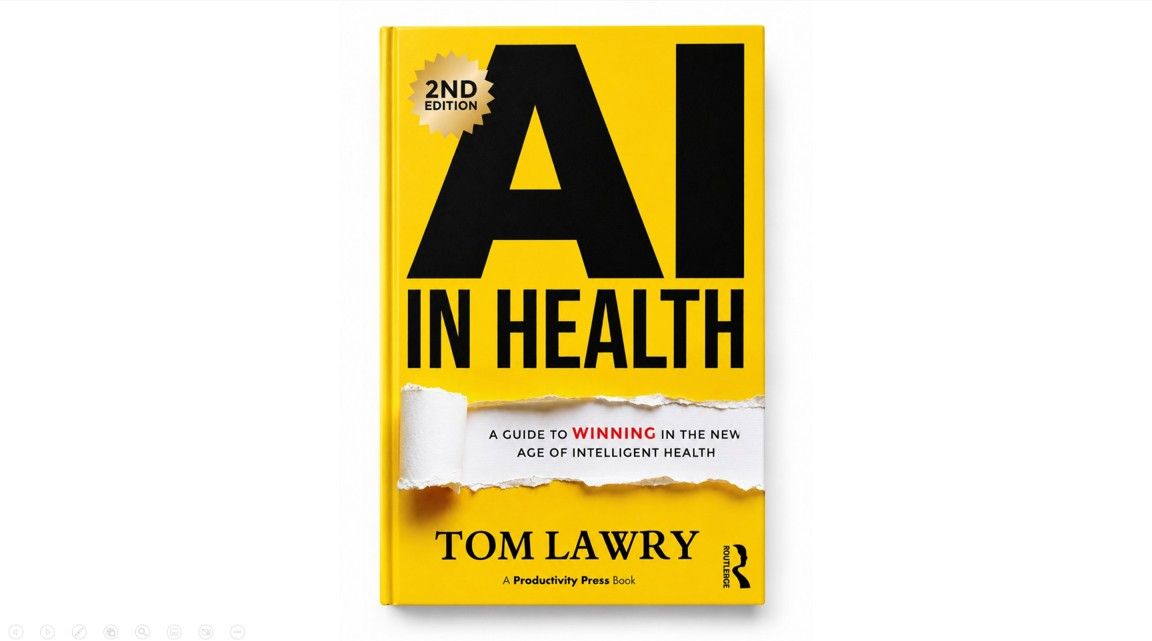

By Tom Lawry June 5, 2026
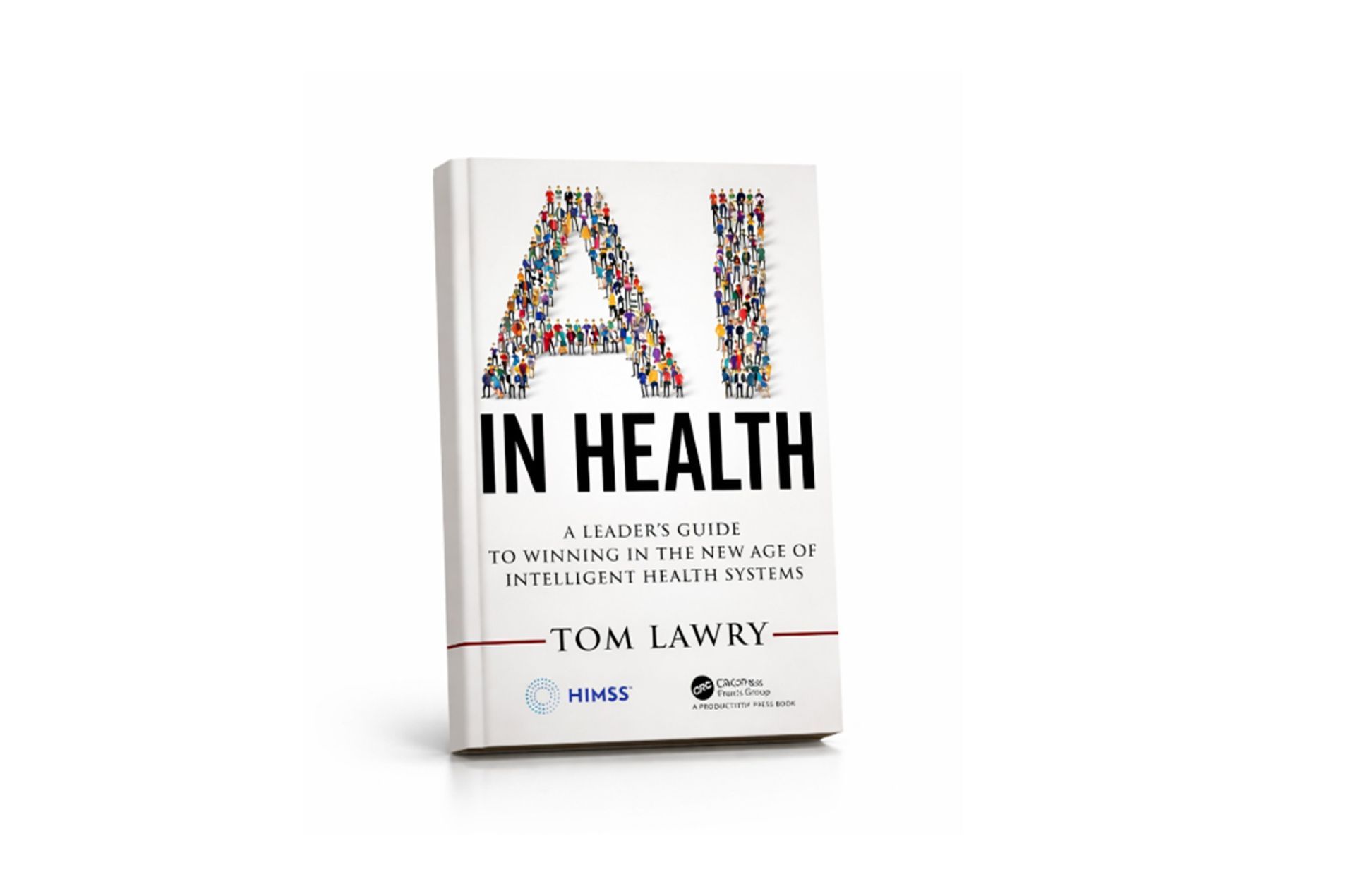
𝗘𝘅𝗰𝗶𝘁𝗲𝗱 𝘁𝗼 𝘀𝗵𝗮𝗿𝗲 𝗺𝘆 𝗳𝗶𝗿𝘀𝘁 𝗹𝗼𝗼𝗸 𝗮𝘁 𝘁𝗵𝗲 𝗰𝗼𝘃𝗲𝗿 𝗮𝗿𝘁 𝗳𝗼𝗿 𝘁𝗵𝗲 𝘀𝗲𝗰𝗼𝗻𝗱 𝗲𝗱𝗶𝘁𝗶𝗼𝗻 𝗼𝗳 𝘼𝙄 𝙞𝙣 𝙃𝙚𝙖𝙡𝙩𝙝 - 𝘼 𝙂𝙪𝙞𝙙𝙚 𝙩𝙤 𝙒𝙞𝙣𝙣𝙞𝙣𝙜 𝙞𝙣 𝙩𝙝𝙚 𝙉𝙚𝙬 𝘼𝙜𝙚 𝙤𝙛 𝙄𝙣𝙩𝙚𝙡𝙡𝙞𝙜𝙚𝙣𝙩 𝙃𝙚𝙖𝙡𝙩𝙝. When HIMSS and CRC Press published the first edition in 2020, most health leaders were still asking whether AI would ever truly arrive. That question has been answered. The transformation of health and medicine is underway. The question that matters now is what skills, mindsets, and strategies will separate health leaders who shape this transformation from those who get swept along by it? That's what this new edition is built to answer. Look for it this fall.
By Tom Lawry May 26, 2026
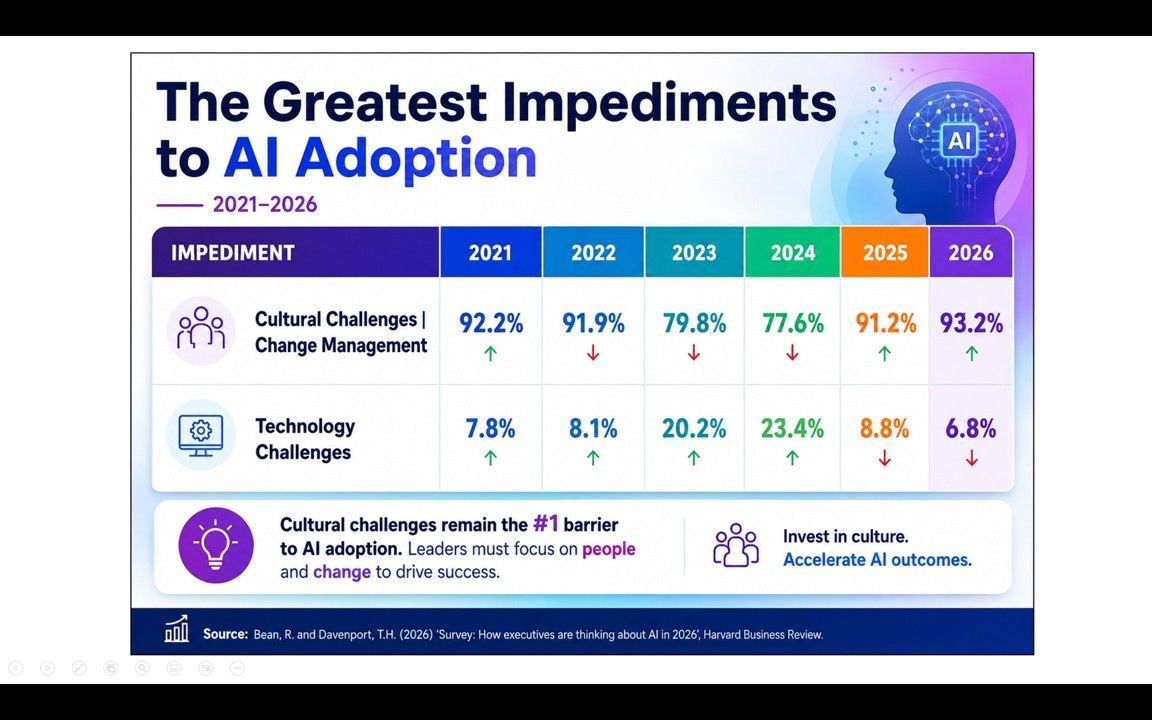
If your AI initiatives are failing to drive measurable value, it’s not because you picked the wrong technology. It's failing because of people – And it’s usually not their fault. A 2026 Harvard Business Review survey says 93.2% of executives point to cultural challenges and change management as the #1 barrier to AI adoption, which drives value. Technology challenges? 6.8%. This has been true every single year since 2021. Here's the hard truth: You've invested in the tools. You've hired great tech talent. But many leaders who get caught up in the vision of AI-driven innovation miss something that is Critical-to-Success: Innovation is a voluntary act. You cannot force people to embrace something new. You can only create the conditions that make them want to. And so, are you investing as much in upskilling your workforce as you are in your tech investments? One of the first questions I ask leaders in my advisory work is a simple but important starting point: Is AI part of your HR plan?
By Tom Lawry April 21, 2026
𝗛𝗲𝗮𝗹𝘁𝗵𝗰𝗮𝗿𝗲 𝗶𝘀 𝗲𝗻𝘁𝗲𝗿𝗶𝗻𝗴 𝗶𝘁𝘀 𝗻𝗲𝘅𝘁 𝗶𝗻𝘃𝗲𝘀𝘁𝗺𝗲𝗻𝘁 𝗰𝘆𝗰𝗹𝗲—𝗮𝗻𝗱 𝗔𝗜 𝗶𝘀 𝗮𝘁 𝘁𝗵𝗲 𝗰𝗲𝗻𝘁𝗲𝗿 𝗼𝗳 𝗶𝘁.  I joined Wilmington Trust on their Capital Considerations podcast to unpack what AI really means for the healthcare investment landscape—and why we’re still in the early stages of a long transformation cycle. Done right, AI will lead to the creation of Intelligent Health Systems which will augment humans in our ability to improve the provision of health and medical services across all touchpoints, experiences and channels. Appreciate the conversation with Tony Roth , Chief Investment Officer, for a thoughtful discussion on where this is all heading. Listen to the podcast here. T.
By Tom Lawry March 25, 2026
𝗪𝗵𝗲𝗻 𝗔𝗜 𝗶𝘀 𝗱𝗼𝗻𝗲 𝗿𝗶𝗴𝗵𝘁, 𝗲𝘃𝗲𝗻 𝗼𝘂𝗿 𝗳𝗮𝗶𝗹𝘂𝗿𝗲𝘀 𝗯𝗲𝗰𝗼𝗺𝗲 𝗳𝘂𝗲𝗹 𝗳𝗼𝗿 𝗽𝗿𝗼𝗴𝗿𝗲𝘀𝘀, 𝗶𝘀 𝘁𝗵𝗲 𝘁𝗵𝗲𝗺𝗲 𝗼𝗳 𝗺𝘆 𝗹𝗮𝘁𝗲𝘀𝘁 𝗮𝗿𝘁𝗶𝗰𝗹𝗲 𝗳𝗼𝗿 𝙄𝙣𝙨𝙞𝙙𝙚 𝙋𝙧𝙚𝙘𝙞𝙨𝙞𝙤𝙣 𝙈𝙚𝙙𝙞𝙘𝙞𝙣𝙚. AI isn’t just a tool. It’s a catalyst for becoming a master adaptive learner—helping each of us personalize how we grow, think, and lead in an AI-enabled world. If you’re a leader, clinician, or knowledge worker trying to make sense of AI’s impact on your role… this article is for you . T.
By Tom Lawry March 22, 2026
𝗜 𝗺𝗶𝘀𝘀𝗲𝗱 𝗛𝗜𝗠𝗦𝗦 𝗯𝘂𝘁 𝗹𝗲𝗮𝗿𝗻𝗲𝗱 𝘁𝗵𝗮𝘁 𝗺𝘆 𝗯𝗼𝗼𝗸 𝘼𝙄 𝙞𝙣 𝙃𝙚𝙖𝙡𝙩𝙝 𝘄𝗮𝘀 𝘁𝗵𝗲 #𝟭 𝗯𝗲𝘀𝘁𝘀𝗲𝗹𝗹𝗲𝗿 𝗮𝘁 𝘁𝗵𝗲 𝗛𝗜𝗠𝗦𝗦 𝗯𝗼𝗼𝗸𝘀𝘁𝗼𝗿𝗲 𝗶𝗻 𝗟𝗮𝘀 𝗩𝗲𝗴𝗮𝘀 𝗹𝗮𝘀𝘁 𝘄𝗲𝗲𝗸. That surprised me. Because the book was published six years ago — which in AI years feels like ancient history. Since then, healthcare has moved from the age of AI curiosity to the age of AI accountability. Which makes the timing of this news even better. I’ve just signed an agreement with Taylor & Francis / CRC Press to publish a second edition of AI in Health coming this fall. Thank you to everyone who has read, shared, and applied the ideas from the first edition of AI in Health (and my other books). Stay tuned. T.
By Tom Lawry March 3, 2026
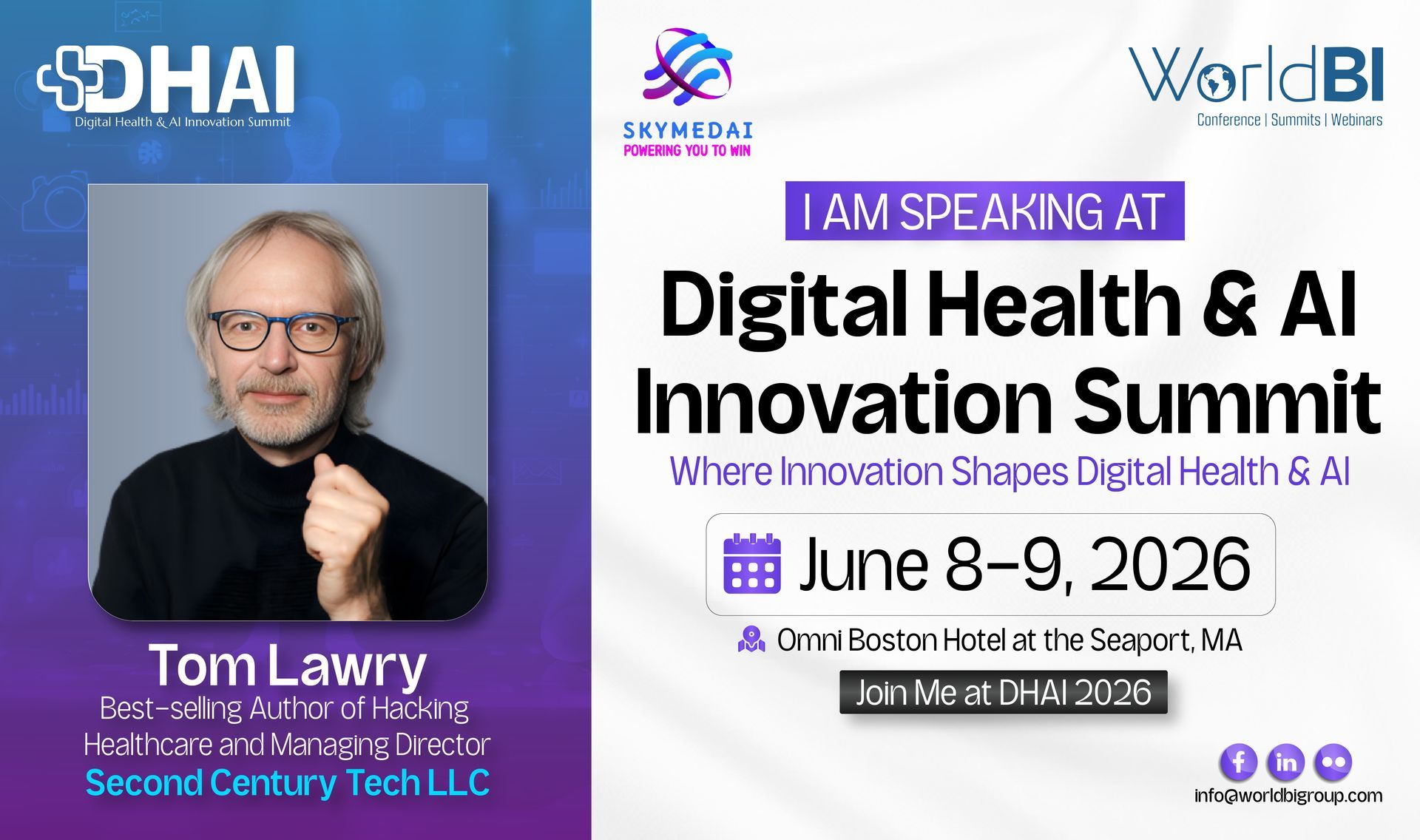
Looking forward to the DHAI Summit. I'll be keynoting and learning alongside so many talented leaders who are pushing the boundaries of what's possible at the intersection of AI and healthcare. My keynote will explore how health organizations can move beyond hype and experimentation to achieve real-world, scalable AI impact — and what it truly means to put the Human + AI equation to work in ways that are responsible, practical, and value-driven. If you're working in digital health, life sciences, or healthcare AI, this is a great place to be. 📅 June 8–9, 2026 📍 Omni Boston Hotel at the Seaport
By Tom Lawry February 24, 2026
We've reached a strange paradox in healthcare: AI adoption is accelerating, investment is growing, and vendor solutions are multiplying — yet most organizations are not seeing AI value actually scale across clinical outcomes, financial performance, or operations. I see this pattern constantly. Healthcare is good at starting AI. We are far less good at turning it into something that measurably and consistently changes results for the people we serve. Here are the five reasons I see most often, and one overlooked leadership skill that, when present, dramatically increases the odds of success. Five Reasons AI Value Stays Locked 1. No clear definition of value — before you start In my experience, many organizations deploy AI without first agreeing on what success looks like in measurable terms. Metrics are vague, retrospective, or disconnected from clinical or financial performance. Without a pre-defined baseline and agreed-upon KPIs, there's no way to demonstrate ROI — and initiatives drift without accountability. Projects get declared "complete" at go-live, not at value realization. 2. Pilots that go nowhere Healthcare is highly adept at piloting AI. Industrializing it is another story. I've watched impressive pilots stall out more times than I can count — and the data backs this up: only about 30% of AI healthcare pilots make it to full production. Most are siloed experiments with no integration into operational workflows, no change management plan, and no budget for enterprise rollout. The result is a graveyard of promising ideas that never escape proof-of-concept. Value locked in pilots cannot move system-level metrics.  3. Data that isn't ready AI performs only as well as the data it consumes. In healthcare, that data is fragmented across EHR systems, legacy platforms, and departmental silos — with inconsistent coding, missing fields, and poor interoperability. Where data does exist, governance structures around quality, access, and lineage are often immature. The result is models that underperform, eroding the clinical trust that adoption depends on. 4. Change management treated as an afterthought This one frustrates me most. AI implementation is too often treated as a technology project rather than a people and process transformation. Insufficient time and resources go toward training end users, redesigning workflows, and building the clinical and operational champions needed to sustain adoption. Without behavioral change, technology plateaus well below its potential — or simply goes unused. 5. AI chasing the wrong priorities Many AI investments I see are driven by vendor marketing, peer benchmarking, or departmental enthusiasm rather than enterprise strategic need. The result is a portfolio of capabilities that don't address what leadership is actually accountable for: cost reduction, quality metrics, patient access, margin improvement. Optimizing the wrong things produces activity, not outcomes. The Real Problem Isn't the Technology Here's what I've come to believe after working through these challenges with many organizations: the AI tools available today are genuinely capable of driving meaningful outcomes. The failure points are structural, organizational, and strategic — rooted not in how algorithms work, but in how leaders plan, deploy, govern, and evaluate. The single most important thing I've learned about scaling AI innovation is this: innovation is a voluntary act. You cannot force people to embrace something new. You can only create the conditions that make them want to. The Hidden Leadership Skill: Become a Bridger This is where a framework I recently encountered has genuinely shifted how I think about the problem. In their new book Genius at Scale, Linda A. Hill, Emily Tedards, and colleagues introduce what I consider one of the most useful concepts for scaling innovation I've come across. They call it "Bridging" — and the leaders who do it well, they call "Bridgers." Bridgers are not the loudest voices in the room. They are not necessarily the most technical. What makes them disproportionately effective is their ability to work at the intersection of people, trust, and collaboration across organizational boundaries. In practice, I see this play out in three ways: Bridgers curate the right partners. They are deliberate about who needs to be at the table — not just the technology team or the clinical champions, but operational leaders, finance partners, and the frontline staff whose workflows will actually change. And they bring these people in early, before decisions are made. Bridgers build mutual trust. They listen more than they advocate. They communicate upward, downward, and laterally. What I find most powerful here is their understanding that persuading someone to embrace a new idea requires understanding not just what they say — but what they value, what they fear, and what's already weighing on them when they show up to work. Bridgers create mutual commitment. They don't hand off and move on. They stay engaged through implementation, through the hard middle, through the moments when adoption stalls and the metrics aren't moving yet. They hold coalitions together when momentum fades. When I step back and look at the organizations that are actually scaling AI value, this is what I see in common. It's not the most sophisticated technology stack. It's not the biggest budget. It's leaders who understand that done right, AI in healthcare isn't fundamentally about technology — it's about empowerment. Helping clinicians be better at what they care about. Giving operational leaders clearer signal through the noise. Helping mission-driven organizations learn faster than their problems are growing. Leaders who embrace this won't just deploy AI. They'll scale it into something that genuinely changes what their organizations can do. The question I keep coming back to is a simple one: Who in your organization is playing the Bridger role right now?
By Tom Lawry February 20, 2026
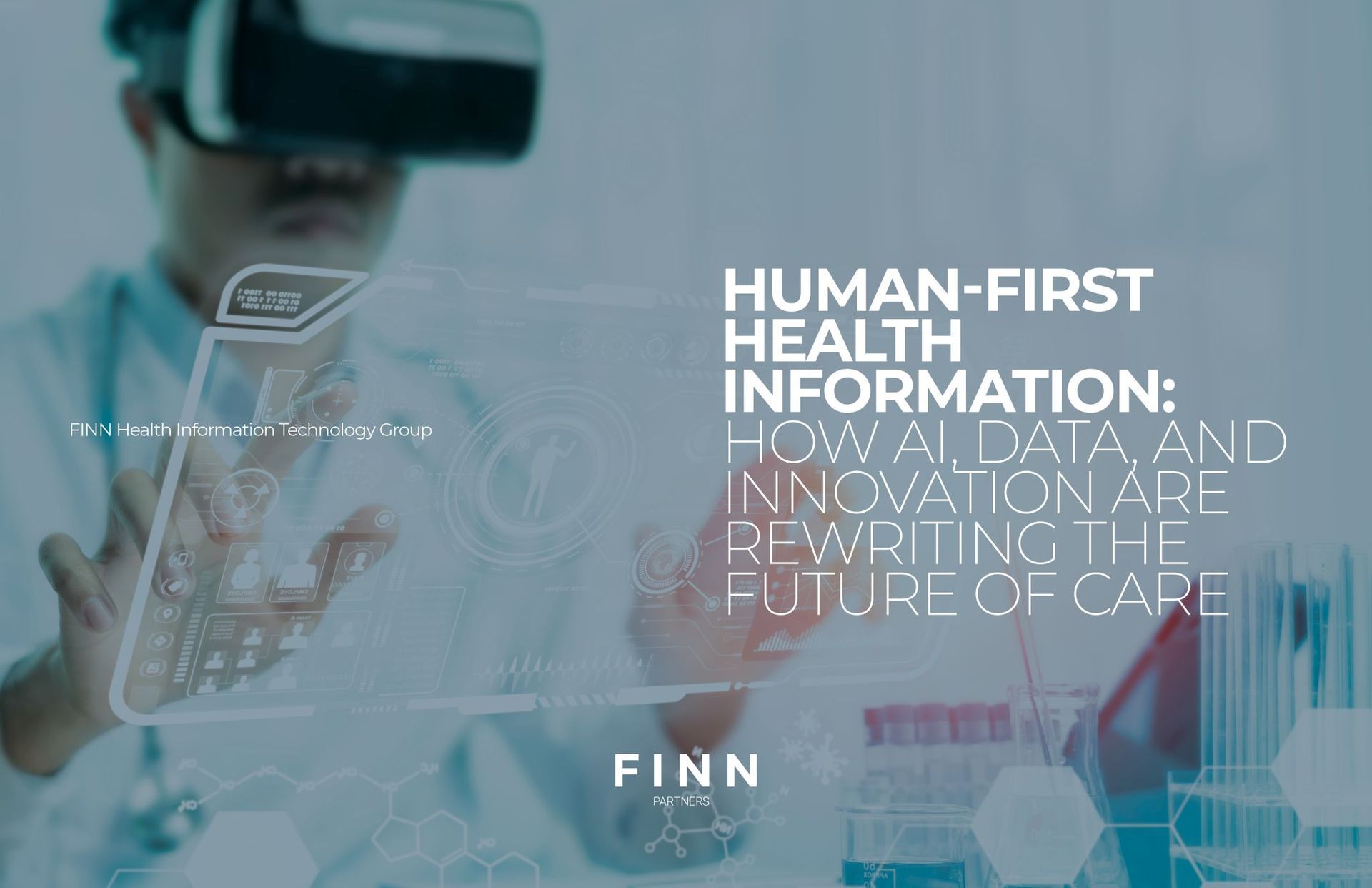
Excited to share FINN Partners’ new eBook: Human-First Health Information: How AI, Data, and Innovation Are Rewriting the Future of Care. As healthcare enters a new era of AI-enabled decision-making and data-driven transformation, one principle remains essential: human-first health information. Trusted, accessible, actionable insights that improve outcomes and strengthen patient experience. I contributed a chapter focused on mastering your AI learning journey.  Click on this link to download a free copy. T.
By Tom Lawry February 11, 2026
Had bumper stickers existed in the 1850s, Dr. John Snow might have had one on the back of his carriage that later became popular in the 1960s with the counterculture crowd that read: Subvert the Dominant Paradigm It was 1854, and a deadly cholera outbreak was tearing through London. At the time, the medical establishment believed cholera spread through miasma—a poisonous cloud of bad air. John Snow, an unknown physician who lived in the affected neighborhood, saw something different. As he watched neighbors die, he became convinced the disease wasn’t airborne—it was waterborne. When Snow presented his theory to London’s medical leaders, he was dismissed. But he persisted. Through interviews, careful observation, data tables, and his now-famous map, Snow traced the outbreak to a contaminated water pump. His work helped stop the epidemic—and gave rise to what we now call epidemiology. Healthcare has been here before. Fast-forward to the 1970s. Even with mounting evidence, endoscopic surgery faced strong resistance. Leading surgeons believed “large problems required large incisions.” Minimally invasive “keyhole” surgery was dismissed. Today, endoscopy is recognized as one of the most important breakthroughs in modern medicine. Change is hard—especially in healthcare.  Since medicine emerged as a data-driven scientific discipline, progress has depended on leaders willing to challenge prevailing assumptions. Vaccines. Antibiotics. Sanitation. Clean water. Preventive care. None of these advances came from doing more of the same. Standing behind every major leap forward were leaders who shared two traits: They saw problems through a different lens. They were willing to challenge the status quo to make healthcare better. To be clear: thinking differently does not mean ignoring evidence or freestyling in the operating room. Medicine depends on rigor, standards, and proven best practices. But progress happens when we apply that science in new ways—more inclusive, more efficient, and more effective ways. The art and science of thinking differently Steve Jobs famously made “Think Different” a rallying cry, reminding us that the people who change the world are often the ones who see it differently. True innovators connect the unconnected. They combine ideas across disciplines. They don’t just play the game better—they change the game. Yet not all leaders are equal when it comes to innovation. Research shows that successful innovators spend significantly more time deliberately trying to think differently. For many people, this doesn’t come naturally—and it can feel uncomfortable or exhausting. The good news? Thinking differently is a skill, not a gift. Most of our innovation capacity is shaped by environment and practice, not genetics. With repetition, what once felt uncomfortable becomes energizing—and that’s when the best ideas emerge. History is full of reminders that even breakthrough ideas take time to find their true purpose. Early visions for the telephone included using it merely to notify people that a telegraph message had arrived. And now, here we are—with AI. AI has exploded into healthcare and society, driving change at a pace few organizations are prepared for. What works today will feel outdated tomorrow. Leaders who are complacent with the current state of healthcare will be eclipsed by those who think differently, plan creatively, and act with intent. While many health leaders talk about innovating with AI, I’m looking for the misfits—the ones whose ideas make traditionalists uneasy, but who ultimately move health and medicine forward. They’re the ones who’ve always changed the world. Could that be you? T.
By Tom Lawry February 3, 2026
𝗟𝗮𝘀𝘁 𝘄𝗲𝗲𝗸 𝗶𝗻 𝗝𝗼𝗵𝗮𝗻𝗻𝗲𝘀𝗯𝘂𝗿𝗴, 𝗜 𝗰𝗮𝘂𝗴𝗵𝘁 𝗮 𝗴𝗹𝗶𝗺𝗽𝘀𝗲 𝗼𝗳 𝘁𝗵𝗲 𝗳𝘂𝘁𝘂𝗿𝗲 𝗼𝗳 𝗔𝗳𝗿𝗶𝗰𝗮—𝗮𝗻𝗱 𝗶𝘁 𝗱𝗶𝗱𝗻’𝘁 𝗰𝗼𝗺𝗲 𝗳𝗿𝗼𝗺 𝗶𝘁𝘀 𝗯𝗿𝗲𝗮𝘁𝗵𝘁𝗮𝗸𝗶𝗻𝗴 𝗹𝗮𝗻𝗱𝘀𝗰𝗮𝗽𝗲𝘀 𝗼𝗿 𝘁𝗼𝗱𝗮𝘆’𝘀 𝗹𝗲𝗮𝗱𝗲𝗿𝘀. 𝗜𝘁 𝗰𝗮𝗺𝗲 𝗳𝗿𝗼𝗺 𝗮 𝗻𝗲𝘄 𝗴𝗲𝗻𝗲𝗿𝗮𝘁𝗶𝗼𝗻 𝗼𝗳 𝘆𝗼𝘂𝗻𝗴, 𝘁𝗲𝗰𝗵-𝘀𝗮𝘃𝘃𝘆 𝗔𝗳𝗿𝗶𝗰𝗮𝗻𝘀 𝗿𝗲𝗮𝗱𝘆 𝘁𝗼 𝗰𝗼𝗱𝗲 𝘁𝗵𝗲 𝗻𝗲𝘅𝘁 𝗰𝗵𝗮𝗽𝘁𝗲𝗿 𝗼𝗳 𝘁𝗵𝗲 𝗰𝗼𝗻𝘁𝗶𝗻𝗲𝗻𝘁. AMLD Africa brought together at the University of the Witwatersrand students and emerging tech entrepreneurs from across Africa for four days of learning, networking, and serious thinking about what’s possible. From delivering digital services to some of the world’s most remote, low-resource communities to upskilling Africans at scale and building sustainable solutions with global relevance, the ambition on display was extraordinary. What impressed me most wasn’t just the depth of technical knowledge in the room—it was the hunger. The passion. And the clear sense of responsibility these young Africans feel to use AI and digital tools to improve Africa and, in doing so, improve the world. If this generation is any indication, Africa’s future is not just promising—it’s already being built. To the students and entrepreneurs, I met: 𝗬𝗼𝘂’𝘃𝗲 𝗴𝗼𝘁 𝘁𝗵𝗶𝘀. 𝗚𝗼 𝗼𝘂𝘁 𝗮𝗻𝗱 𝗱𝗼 𝗴𝗿𝗲𝗮𝘁 𝘁𝗵𝗶𝗻𝗴𝘀. T. #AMLDAfrica #ArtificialIntelligence #Africa #Innovation #Leadership #FutureOfWork #AIForGood #AfricaRising
Show More